The Nature Nut
Published 12:30 pm Thursday, August 7, 2025
They say that beauty is in the eye of the beholder, but I think there is more to it. Having some previous knowledge about what you are beholding and why it looks like it does will certainly influence how you see it.
After living in the U.K., I had only been in Canada three years before I drove from Ontario to B.C. in late summer.
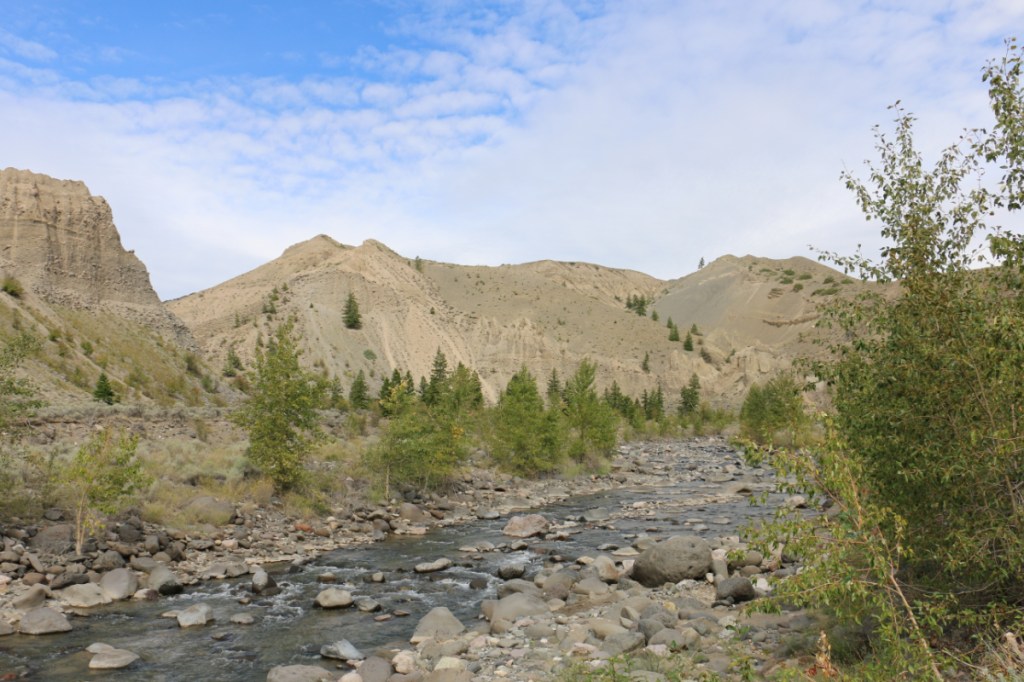
I distinctly remember my shock at seeing the dry, barely vegetated, brownish hills all around Kamloops and thinking that they were enormous slag heaps – the only thing I had in my mind to compare them with.
The slag heaps were ugly and abundant in the industrial north of England, and we just tried to ignore them. At the same time, we were fascinated by the brilliant orange-red skies produced when the red-hot slag from the iron and steel plant was tipped onto the piles 10 miles away.
I had never seen natural dry grasslands before, but once I got to explore them with the local naturalists and then my botanist husband, I discovered just how incredibly beautiful they are.
In the spring and early summer, they are covered in many beautiful flowers, grasses, shrubs and dotted with Ponderosa and lodgepole pine trees and Douglas-fir.
Terrestrial lichens are abundant especially on dry sites and tree branches are dotted with the chartreuse lemon-yellow wolf lichen and festooned with arboreal lichens. So many of the lichens are important to wildlife for winter sustenance, especially mule deer and caribou.
We just spent a few days in the Chilcotin, where we saw many lovely gently rolling grasslands, interspersed with mountains, wetlands, marshlands, cattle and horse ranches, as well as forests in all stages – young, old and recently burned or logged. On the lakes, we were lucky to see the huge white pelicans and ospreys fishing.
We also saw signs of one of the rarest (possibly mythological) animals of BC – the “side-hill gouger.” Steep grass-covered slopes especially on the banks of the Fraser just west of Williams Lake show the parallel lines that run across the slopes made by this creature. Apparently, the two legs on one side of the gouger’s body are shorter than the two on the other side. This means it can only walk across the side hills in one direction at a time.
I have also observed similar evidence of this creature’s presence in the Bulkley Valley – particularly obvious in winter when the light snow on the ground exaggerates the parallel stripes running across aspen-covered slopes between Smithers and Telkwa.
Some folks dispute the existence of this rare animal and attribute the patterned slopes to slow, wave-like, slumping of the soils (or livestock), but I prefer to think this fascinating creature really does exist out there.
Check it out for yourself.