The Nature Nut
Published 12:30 pm Thursday, July 31, 2025
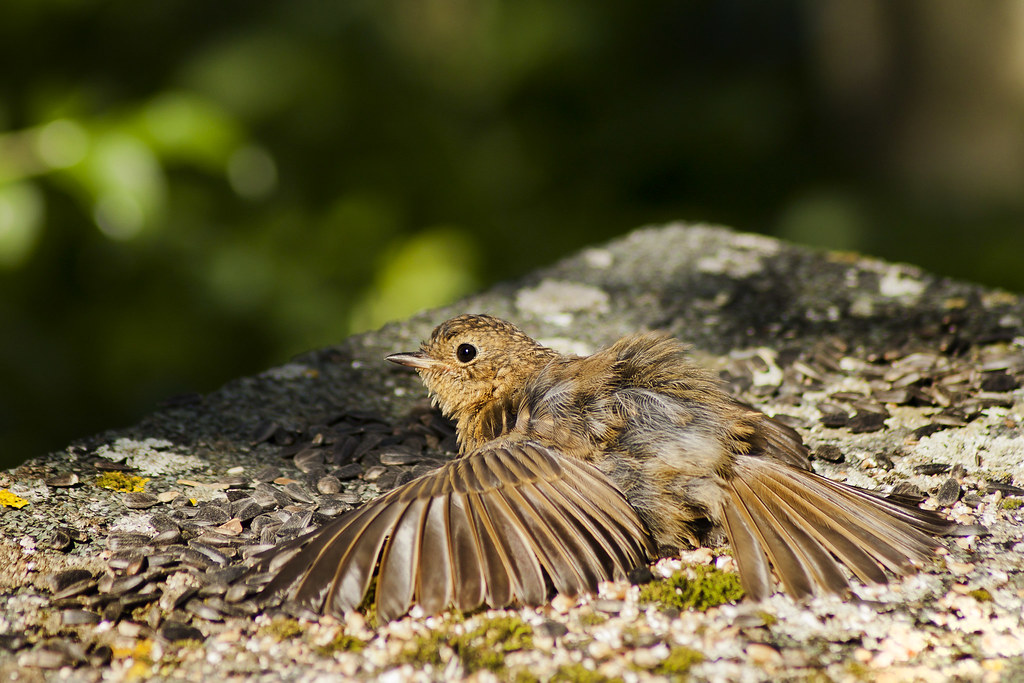
I watched an American Robin “sunbathing” today on our lawn. Why do birds do this?
It is generally believed they bask in the hot sun to relieve themselves of feather lice. An experiment using artificial wings covered in feathers to which feather lice were added showed that only 10 minutes in the heat from the sun was enough to kill off the feather lice (which are very tiny and are often hard for the birds themselves to pick off).
Other things to watch for in this warm weather – dragonflies, butterflies and hummingbird moths, bumble bees of many types, small native bees, other insect flower pollinators, and, of course, honeybees.
If you have nothing else to do, a wonderful relaxing way to spend some time in the garden is to just sit quietly and watch the pollinators, discover which pollinators are visiting which flowers, study how they approach, land and enter the flowers. It is a lovely way to get in touch with the natural world.
Also, there are lots of juvenile birds around now, many being fed by their parents away from the nest. Many juveniles are rather drab beiges, browns, grays, streaked or spotted or splodged. So how can you figure out what they might be? If you see a mature parent bird with the juvenile that helps, but you can make some educated guesses also.
Look at the beak shape – is it heavy like a seed-eater beak of a sparrow or narrow and pointed like a warbler that prefers insects?
Are there any markings on the bird at all? White tail feathers on a brownish streaky small bird may mean it is a dark-eyed junco.
Is it very small and flitting about on the lower branches of a conifer? It could be a ruby-crowned kinglet, or if it is feeding higher up in the conifer, it is may be a golden-crowned kinglet.
Cornell Lab "All About Birds" found online has a great little guide to clues to watch for to help identify those LBJs (little brown jobs).
Now is the time to watch the birds, bees and flowers.