The Nature Nut
Published 12:30 pm Thursday, July 24, 2025
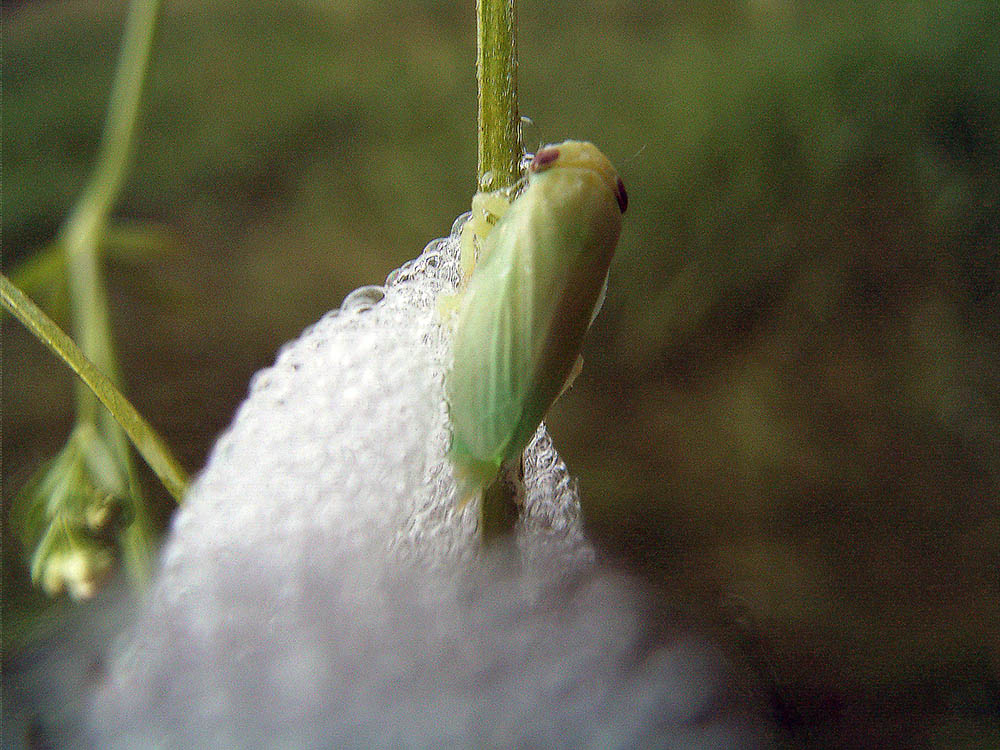
Just these past few weeks, we have noticed the presence of spittlebugs on sapling aspens and some other young plants. We have never seen this on aspens before, and we have lived on this property for over 40 years.
Spittle is produced by nymphs of the ‘meadow spittlebug’ (Philaenus spumarius meaning “foam lover”). The spittle looks ‘disgusting’ (“eeuw”), but it will not do you any harm. Apparently, the ‘spit’ is bitter, but I have not tried it.
Using their straw-like mouth parts (reputed to be the largest known sucking power of any bug), the nymphs suck on the contents of xylem cells (“bug juice”) located in the stems of host plants. Xylem juice is mostly water with very few nutrients. Most creatures (e.g. aphids) suck on the more nutritious sugar-loaded phloem and leaf cells.
Nymphs need to get rid of the excess water sucked from the xylem cells and do so by excreting large volumes of dilute urine. They can produce between 150 and 280 times their own body weight.
As they do this, they pass out air from their anus, forming bubbles in the urine. The foam produced contains a surfactant that helps maintain the bubbles for longer so the soft-bodied nymph can exist inside its own “bubble wrap” protected from dehydration, predation and maybe UV light. Periodically the nymph may have to extend the tip of its abdomen out of the foam to get more oxygen.
When mature, the adults are called froghoppers, partly because their heads are frog-like with two big eyes on the side, but also, from their impressive jumping ability.
Their strong legs let them jump 50 cm straight up into the air. Adults have hard coats, wings, and are extremely variable in appearance with as many as 30 different colour variants.
While the nymphs may weaken the plants a bit, they do not do major damage. However, since they are known to have over 1,300 different host plant species globally and can pick up bacteria when they suck on the plant juices, they are potentially a major problem in the transmission of bacterial diseases.
One of the worst is caused by the bacterium Xylella fastidiosa which is responsible for the loss of olive trees in Italy, grapevines in California and citrus trees in South America.
The meadow spittlebug is expanding its range northward due to climate change. If you do not like the look of them, you can just wash off the spit with a hose. However, both the nymphs and adult froghoppers are important food items for spiders, other invertebrates, and birds.