The Nature Nut
Published 12:30 pm Thursday, October 2, 2025
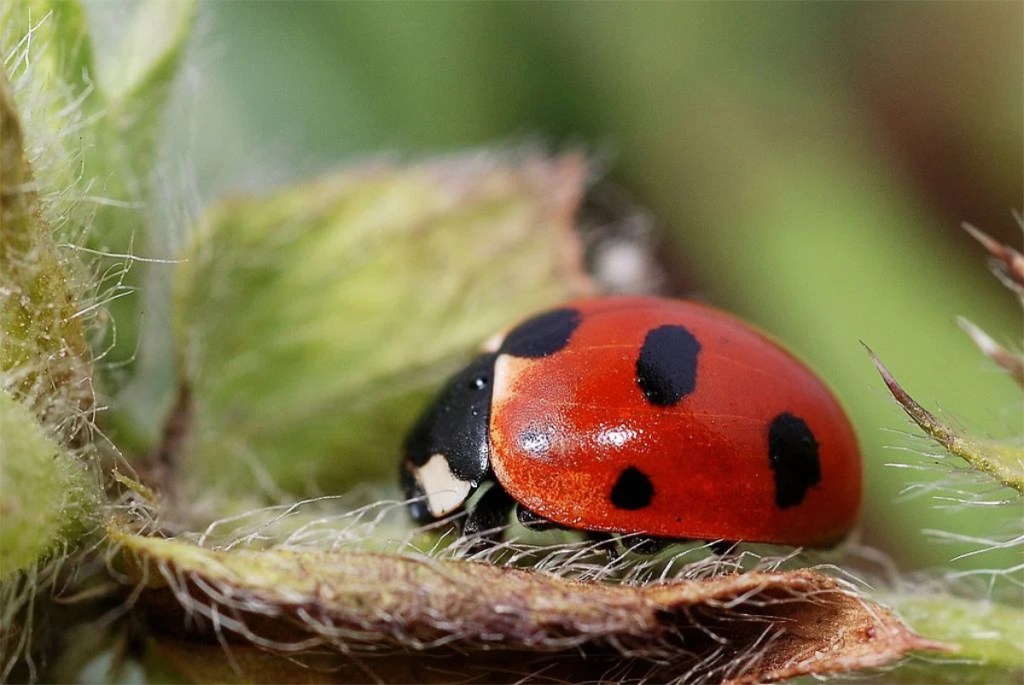
A few days ago, I, and another volunteer (Kevin), worked on removing seed heads and whole plants of common tansy growing along Railway Avenue in Smithers. Common tansy (Tanacetum vulgare) is an introduced, noxious, listed weed that has gradually been taking hold in Smithers.
As we loaded the bags of plants into my car, I noticed a rarely seen insect just inside the back of my car – a ladybug. I thought it was a 2-spotted ladybug, but they can vary in appearance. I persuaded it to fly away but then discovered a second one flying around inside my car. When I got home, I was surprised to see a third one in the bathroom just below a bag I had hung to dry because it was wet from spilling my tea in my car.
As I released the last one, I realized it had been ages since I had seen any ladybugs around Smithers. There used to be many more years ago, and so I started researching why there are so few now.
Several years ago, a group called the Lost Ladybug Project formed to try to determine the numbers and species of ladybugs present in North America. The results were depressing and showed major declines in species, which is a problem as these carnivorous beetles feed on aphids and other crop insect pests.
Native species such as the 9-spotted ladybug — once very common in North America (including Canada) — 2-spotted ladybug and 7-Spotted ladybug numbers are all down, and the transverse ladybug is almost gone in Canada except in the West.
The reason for the drastic declines is not clear. Increased use of herbicides, climate warming deforestation, urbanization, and changes in agricultural practices are all thought to play a part. The appearance of foreign ladybug species, a new virus, or other environmental factors have also been suggested.
The checker-spot Ladybug was accidentally introduced from Europe in the 1960s. In addition, the U.S. deliberately introduced the Asian multicolored ladybug from Japan in 1988 to control aphids in crops.
It is thought that the multicoloured ladybug may well have had an impact on our native species as it seems to be able to cope better with winter climatic conditions as well as compete favourably for the food supply (aphids etc.).
In B.C.’s Lower Mainland instances, of multicoloured ladybugs plastering the outsides of homes was reported as recently as the 1990s or maybe even more recently.
While this was quite alarming for homeowners, it appears that in their native country, multicoloured ladybugs retreat to caves to hibernate for the winter.
People like ladybugs, so there has been a lot of interest in trying to bring back native species in North America. My previous attempts at re-introducing some were not successful, alas.
Maybe the three I released the other day will help.