The Nature Nut
Published 12:30 pm Thursday, September 18, 2025
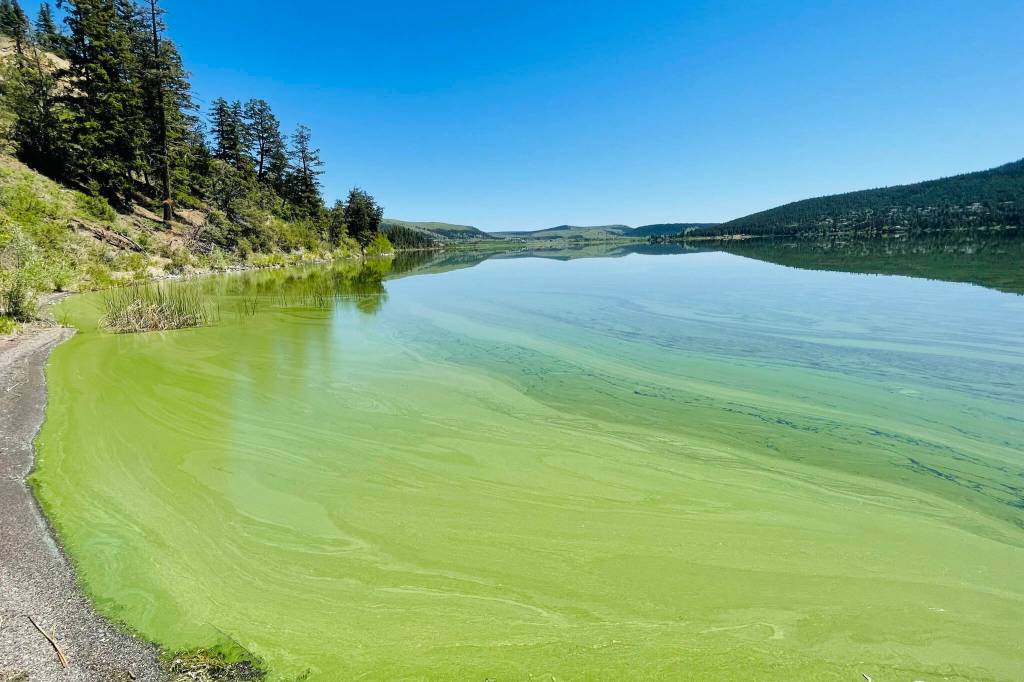
Cyanobacteria belong to a line of ancient microorganisms that have existed on Earth for at least 3.5 billion years and are some of the oldest life forms on the planet.
They belong to a group of single-celled organisms called prokaryotes whose internal structures are not contained inside membranes (pro= ‘before or lacking’, karyo = ‘nucleus’ i.e. ‘lacking a nuclear membrane’). In fact, the cells do not contain any membrane bound structures, so they do not have chloroplasts either.
Cyanobacteria and true bacteria are both classed as Prokaryotes.
Despite the lack of chloroplasts, the cells do contain some chlorophyll as well as some phycobilins, giving them their characteristic blue-green, red or pink colours.
The chlorophyll enables the cells to produce oxygen by a process called oxygenic photosynthesis. The release of oxygen into the atmosphere is believed to have been responsible for the “Great Oxidation Event” that occurred 2.4 to 2.1 billion years ago. Without the presence of oxygen, life as we know it today is not possible.
Cyanobacteria get a bad name for “contaminating” water, but they are beneficial if they are present in balanced proportions because they produce oxygen so that other creatures can live in the water. Trouble happens when the population of cyanobacteria explodes (we use the term “bloom” for this phenomenon). The problem that results in blooms is human-caused.
Naturally, the amount of nutrients present in aquatic systems is just enough to keep every organism happy, but when humans allow extra nutrients to enter a water body, things start to get out of balance. Excess nitrogen and phosphorus are the main problems and come from human-produced wastewater and agricultural run-off entering water bodies.
An influx of nutrients into aquatic systems leads to a process called eutrophication. More nutrients can result in a rapid increase in cyanobacteria forming a bloom often appearing as a scum on the surface of the water.
This is followed by a reduction of, or a complete lack of, oxygen diffusion and blocking of sunlight reaching aquatic plants resulting in a “dead zone” with stagnation and death of aquatic organisms (plant and animal).
Some blooms are so heavy that the water can change colour – turning spectacular blue-green or reds and pinks.
Cyanobacterial blooms can also produce potent cyanotoxins that are toxic for both the aquatic organisms and for humans and wildlife that consume the water. Control of nutrient-laden water is in the hands of wastewater treatment practitioners and farmers are encouraged not to allow nitrogen-rich runoff into local waterways.
One cyanobacterium – Spirulina – is currently being cultivated as a dietary supplement because of its high protein, vitamin and mineral content. Others are being studied as potential biofuels.