The Nature Nut
Published 12:30 pm Thursday, September 11, 2025
As I was pulling the broad bean plants and admiring the wonderful root nodules, I got thinking about nitrogen-fixing organisms and my mind wandered to cyanobacteria.
Cyanobacteria is the name for a large group of organisms that we used to refer to as “blue-green algae.” You have probably heard of the problems they can cause when their populations explode (bloom) in fresh water especially because they release chemicals that can be toxic for humans and fish, as happened in one of our lakes in the Bulkley Valley.
Cyanobacteria can also be eaten by saltwater shellfish, which can then become toxic for human consumption.
However, cyanobacteria can also be extremely beneficial in our northern and coastal forested ecosystems that normally tend to be moist or wet. The forests are very productive and produce large amounts of acidic, organic material (litter, mosses, leaves etc.) that contains a lot of nitrogen.
But, because the conifer litter is acidic, often cold and wet, and there is a shortage of oxygen needed for decomposing bacteria to function well, the organic material does not decompose quickly. The result is that despite huge amounts of nitrogen in the litter, it is largely unavailable and only very slowly released.
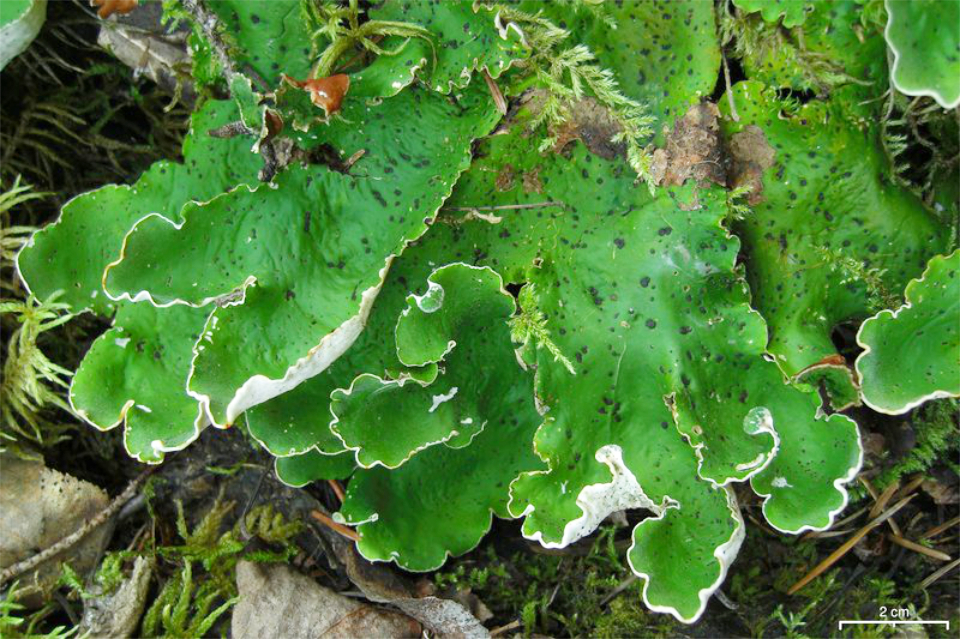
Some lichens, in particular the beautiful green leaf lichen called freckled pelt (Peltigera aphthosa) contain cyanobacteria in small, rounded, bluey-green bodies (freckles or warts) called cephalodia on their upper surface. These bacteria fix nitrogen gas from the atmosphere and convert it into a chemical form that is usable by living organisms.
Lichens do not have roots but absorb nutrients, gases, and water from the atmosphere and surroundings over the whole surface of their body. If they produce too much usable nitrogen or other products, it simply oozes out of the lichen’s body surface, or is washed off by precipitation, and drips down to the ground.
Normally, freckled pelt and some other lichens do not grow on living branches of most conifers bearing needles because they are too acidic. Lichens prefer more neutral to basic conditions for nutrient absorption. Notice that, if lichens are present, they are usually on the tree trunks or dead branches.
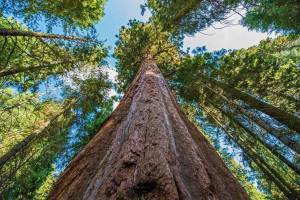
However, there is a wonderful example of green coniferous branches covered in lichens on a trail at the foot of Hudson’s Bay Mountain in Smithers. This is because the conifers are growing underneath an overhead canopy of huge (very tall) cottonwoods that have basic or neutral bark. As rain washes down the cottonwood bark it picks up nutrients and drips it onto the conifer branches creating a nutrient-rich environment for the lichens.
Meanwhile the freckle lichens fix nitrogen and the excess drips down onto the forest floor. Voila – a nutrient-rich interaction between different parts of the ecosystem.
Ain’t nature grand?