The Nature Nut
Published 12:30 pm Thursday, September 4, 2025
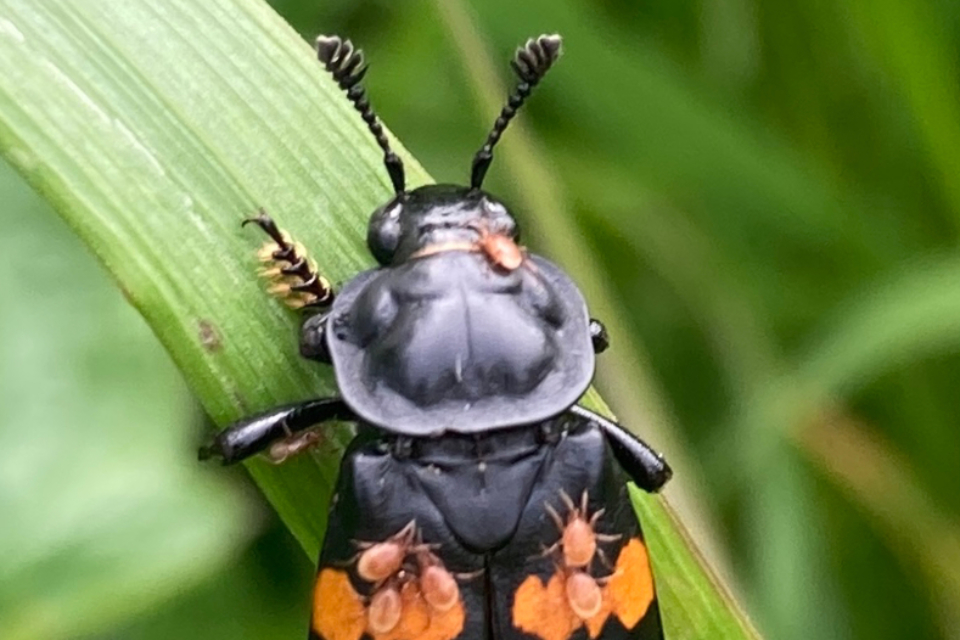
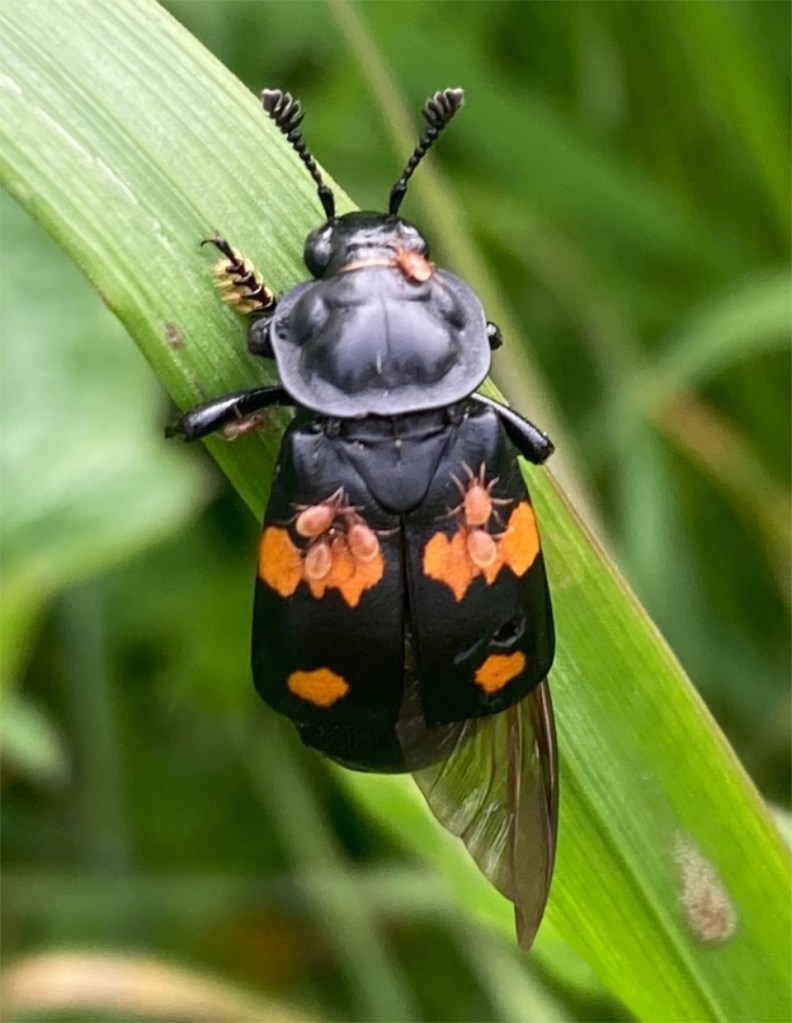
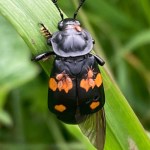
Last week I told you about the partially buried woodrat carcass and I suggested that the “undertaking” was by some kind of burying, carrion or sexton beetle (Nicrophorus genera) of which there are many species.
I did not see one at the burial site, but we have seen lots of burying beetles on our property over the years and watched them moving the carcasses – usually of small rodents or, rarely, birds.
They are fascinating creatures – usually 2-3 cm long or bigger, black with orangey-red markings on their outer wings (elytra) and large club-shaped antennae that are equipped with chemoreceptors for locating the smell of death from a long distance.
Once a carcass is located, the beetle will fly down to it and immediately start to bury it. If there are other beetles present, fights to obtain possession will ensue – males fighting males, females fighting females, with the largest beetles being the winners.
If a male lands on the carcass and is alone, he will emit a pheromone from the tip of his abdomen to attract a female to join him. Together they will move the carcass to favourable soils for burying and then dig a cavity called a crypt underneath the dead animal – sometimes up to 60 cm deep – and pull the carcass down into it.
Over the next eight hours or so, they will roll the carcass into a tight ball, remove the fur or feathers, cover the carcass with secretions designed to reduce bacterial decomposition and mold – all to keep the carcass fresh, ready for their brood (‘grossed out’ yet?). The eggs are laid within the crypt near or on the carcass, a small portion of which may be partially digested, ready for the larvae to hatch and start feeding.
Burying beetles are unusual in that they exhibit parental care in which both the male and female will raise the brood. Newly hatched larvae of some species are known to beg for food and be fed liquefied carcasses by both parents. Sometimes, species may determine that there is not enough food for all the larvae to thrive, so they practice infanticide.
Adult beetles fight off any other creatures trying to feed on their carcass (flies, ants and other carrion beetles). The beetles are often covered with many small red mites. These mites are thought to help the burying beetles by eating the eggs or larvae of competing creatures, although there is some question about the validity of this hypothesis.
Nicophorus defodiens is the most likely species seen in northwestern B.C. as it prefers the wet hardwoods and conifer forests of northern B.C. and it helps to keep them clean.