B.C. signs declaration with First Nations calling for feds to uphold tanker ban
Published 8:00 am Wednesday, November 5, 2025
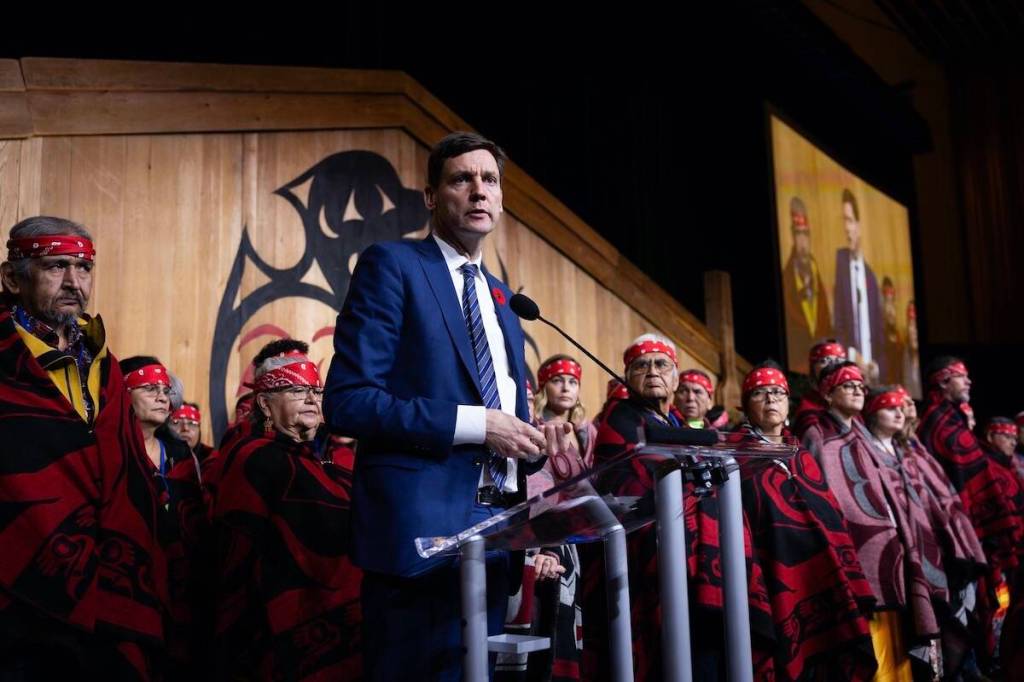
B.C. has signed a declaration along with coastal First Nation leaders calling on the federal government to uphold the North Coast tanker ban.
“We call on the federal government to recognize what generations of leaders have: We need to protect our coasts in order to grow our economy,” Premier David Eby said on Wednesday (Nov. 5) morning at the First Nations Leaders’ Gathering in Vancouver.
This declaration comes after months of lobbying by Alberta Premier Danielle Smith to resurrect plans for an oil pipeline between Alberta and B.C.’s North Coast. For such a project to be viable, the federal government would need to end the ban on oil tankers in North Coast waters carrying more than 12,500 metric tons of crude oil.
Representatives of area First Nations have been firm in their opposition to ending the ban.
“We are here today with the province of British Columbia to call on the federal government to commit to upholding the Oil Tanker Moratorium Act to protect our ecosystems and to grow our coastal economy for the benefit of all British Columbians and for all Canadians, from coast to coast to coast,” said Chief Marilyn Slett, president of the Coastal First Nations, a group of six area Nations.
Mayor Garry Reece of the Lax Kw’alaams band council referenced two historic oil spills as reasons for the ban, and for why it should be kept in place.
These are the 1989 Exxon Valdez disaster in Alaska and the 2016 Heiltsuk First Nation diesel spill, in which a tugboat ran aground, releasing 110,000 litres of diesel fuel into the water.
“We all see what that can do,” he said. “That will destroy all our sea resources that our people today depend on, and we cannot afford to let that happen.”
“My people will never, ever agree to allow oil in our territory.”
B.C. Conservative Leader John Rustad issued a statement later in the day Wednesday saying this stance blocks economic progress.
“Rather than advancing nation-building energy projects to diversify markets, create thousands of skilled jobs, and deliver prosperity for our province, the NDP continue to discourage investment,” Rustad said.
‘Shadow-boxing’ an oil pipeline
Eby casts the protection of the North Coast in economic terms, arguing that the amount of money generated from the clean seas through things such as tourism and fisheries outweighs any gains to be had by building a pipeline.
He makes the case to both the public and the federal government that it is not worth pursuing a new pipeline, hitting his typical notes on the topic, saying there is no project proponent and that a new pipeline would require $40 to $50 billion and be “fully taxpayer-funded” if it were to be brought to fruition.
“It’s really difficult for me to shadow box with a non-existent project that has non-existent benefits because it will never be built, and it’s not going to happen,” Eby said.
It is unclear if this is a symbolic effort or if it is aimed at stopping a real threat by the federal government to remove the ban.
Asked if he has heard from Ottawa that it is considering reversing the ban, Eby responds that he is not going to let a “small minority of voices that are driving wedge politics in Alberta to drive the national conversation.”
But he did say that he has made his position known in meetings with federal officials, including Prime Minister Mark Carney, and that any new pipeline would need to be forced through over provincial and Indigenous objections.